A Brief History of The Program
The Elaine Bacon Literacy Program, originally named the Laubach Literacy Program, was established by Elaine Bacon in 1969. Bacon said, “The program was originally started to help area adults having trouble reading and writing to have a better understanding of the English language. Now the biggest demand is for English as a second language for foreign students and their families.” In 1990, a state grant from the Library of Michigan funded a large collection of materials that included books with accompanying audio tapes. The collection was named the Elaine Bacon Literacy Library, and, after she died, in 1989, the program was renamed for her.
It has undergone a number of changes over the years. In the early days, tutors met students in homes, libraries, churches, coffee shops, and, later, Daniell Heights. For a time, tutors also met students in study rooms in the Michigan Tech Library until the library director objected. Around 2015 the program finally found a home at the Portage Lake United Church. Mondays, Tuesdays, and Wednesdays, tutors met students in the choir room of the church and made use of bookcases for teaching materials. All along, students have been encouraged to participate on Thursdays in programs sponsored by our affiliate organization, International Neighbors, which meets at Portage Lake. During the Covid-19 pandemic, classes were held on Zoom and continue on Zoom to this day. One advantage of doing so is that students from elsewhere can participate including former students who have left the area. Several students from Indonesia also participate.
Today we have five tutors, a varying number of conversation partners, and about 40 students from countries such as Afghanistan, China, Japan, Korea, Iraq, Iran, Germany, Indonesia, Thailand, and Brazil. There is considerable turnover as students often are in the area for a limited period of time. Many are family members of Michigan Tech students, often graduate students, or faculty. Others are research assistants or faculty from other universities in other countries. A few students, though, have been with the program for years. Some tutors provide in-person individualized instruction in their homes while others make use of online resources such as News for You, published by New Readers Press, and Learning English, published by the Voice of America. Most use Zoom or its equivalent.
Some of our students have gone on to graduate school, typically at Michigan Tech, or have taken jobs in the community. They are sometimes preparing to take standardized tests of proficiency in English as part of their applications to graduate school. They are enthusiastic about the program. A student who is on the faculty of a Chinese university wrote just before he returned to China, “I feel my English improved. Also it is more important that I understand more American Culture.”
The program has a website <elainebaconliteracyprogram.org> and publishes an annual newsletter which is included on the website. This year, for the first time, it participated in the national Giving Tuesday program sponsored by Copper Shores and received a number of donations that will allow the program to expand and grow.
===
Since 1959, the volunteers of the Elaine Bacon Literacy Program have been providing free English language tutoring in the Houghton and Hancock area of Michigan’s Upper Peninsula for international adults who wish to improve their English reading, writing, and speaking skills.
Along with our sister group, International Neighbors, we present cultural programs to welcome our international members to America. Besides both group and individual classes we organize activities such as berry picking, potlucks, picnics, cooking, and hikes in the lovely wilderness area of Michigan’s Copper Country.


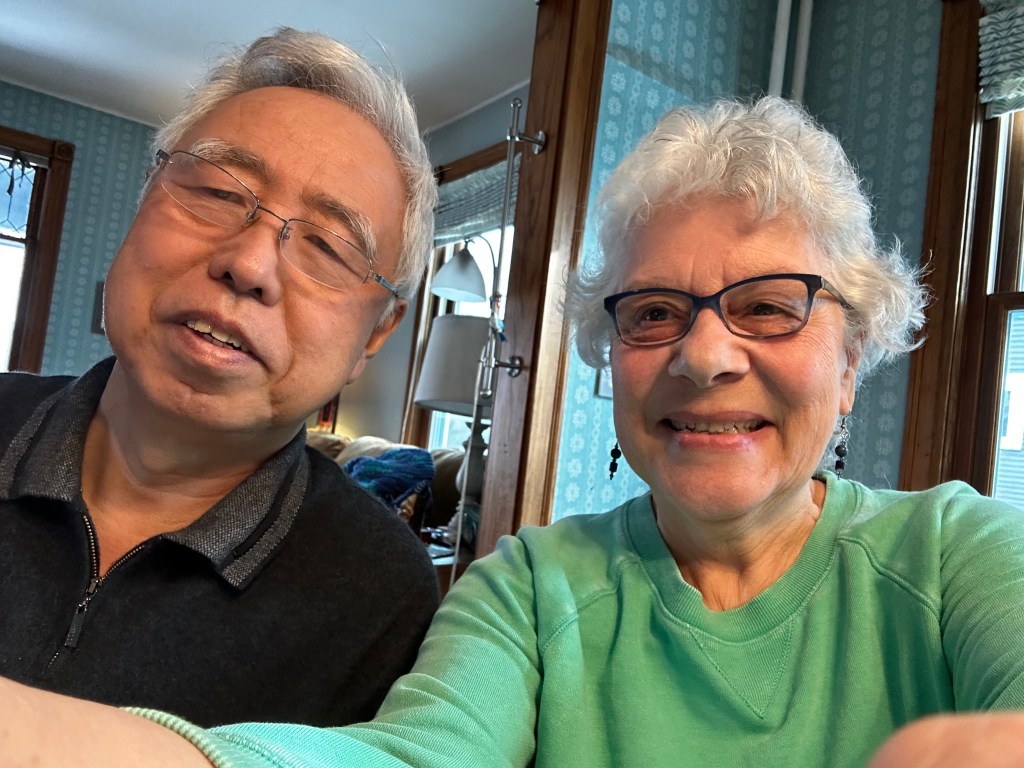


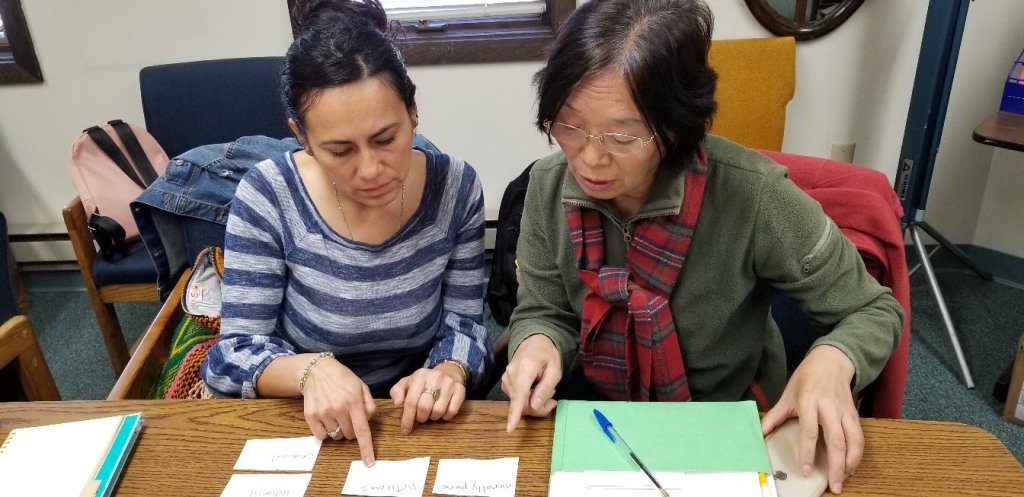
Our students, in turn, share their culture and talents with the community members. For instance, one of our ESL students conducts Chinese language lessons through our program. Others have offered cooking classes. If you are new to the area from another country, we invite you to become part of our community.
===
 Elaine Bacon Literacy Program
You must be logged in to post a comment.