
Hi, I’m Patria. I’m one of the members of an English group guided by Randy and Jill. In this post, I’d like to share my story about returning to my hometown, Aceh Tamiang (2,138 km from the capital), a small town in eastern Indonesia.
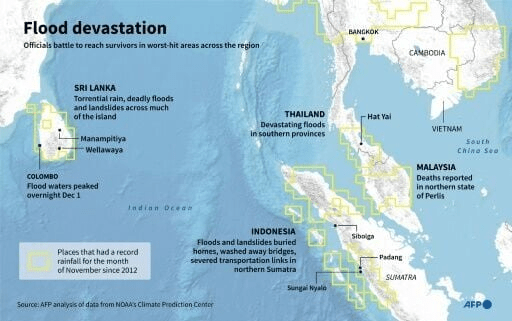
You may have heard or read in the news that last November, Indonesia was hit by a major disaster in three provinces. Flash floods took the lives of 1,030 people, while 205 others were reported missing. The damage was massive: around 1,600 public facilities, 967 schools, 434 places of worship, 145 bridges, 290 office buildings, and 219 health facilities were affected. The floods were even more destructive because they carried large logs and thick mud. The mud filled houses and streets, reaching from ankle to knee height for adults.
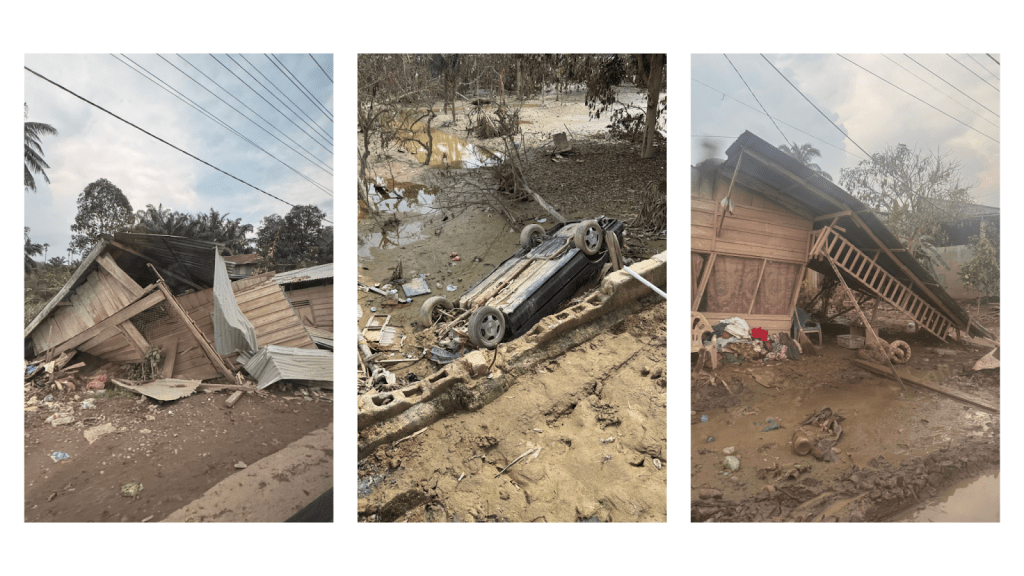
One of the areas most severely affected was my hometown, Aceh Tamiang. Since most of my extended family still live there, I decided to go back at the end of December. This is the story of my experience there.
Cleaning Public Facilities
A day after arriving in Aceh Tamiang, my younger sibling (who is a junior high school teacher) and I helped clean mud at a school. Many volunteers and members of the Indonesian army were there to help. Mud covered everything, from the schoolyard to the classrooms. It was stressful to see, but working together with teachers and volunteers also brought laughter and positive energy. Even in difficult times, we tried to keep our spirits up.
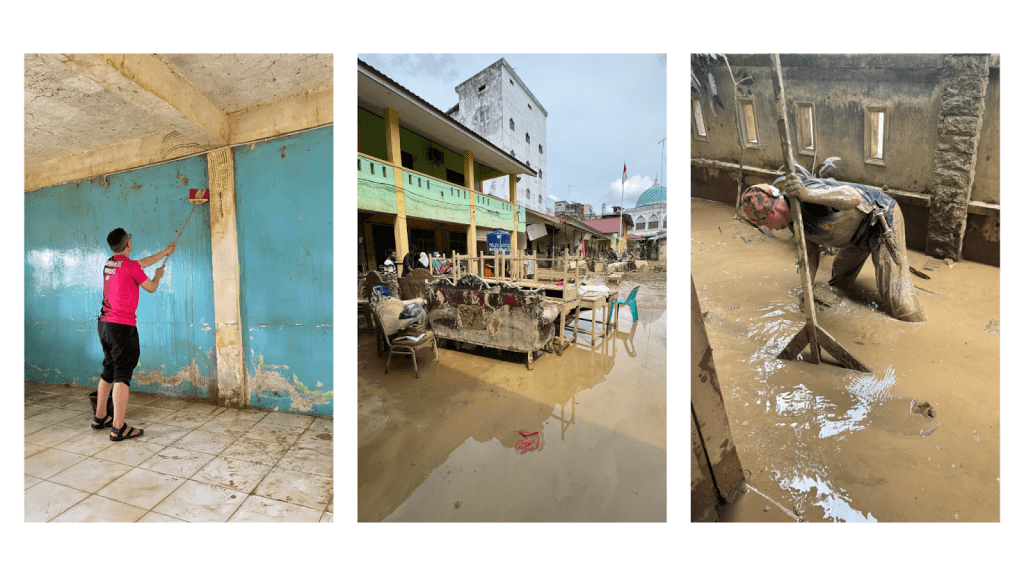
The cleaning process took days before the school could be used again for learning activities. Sadly, many teachers were also victims. My sibling’s rented house, for example, was badly damaged. All rooms were filled with mud, the ceiling collapsed, and most belongings were ruined.
Cleaning Houses to Make Them Livable Again
Another sibling of mine, who has a family and lives in the same town, was also affected. Their rented house was full of mud, and the roads were difficult to access, with mud as high as an adult’s calves. But there was no other choice—the house had to be cleaned. This became my main activity in Aceh Tamiang: helping clean houses so they could be lived in again.
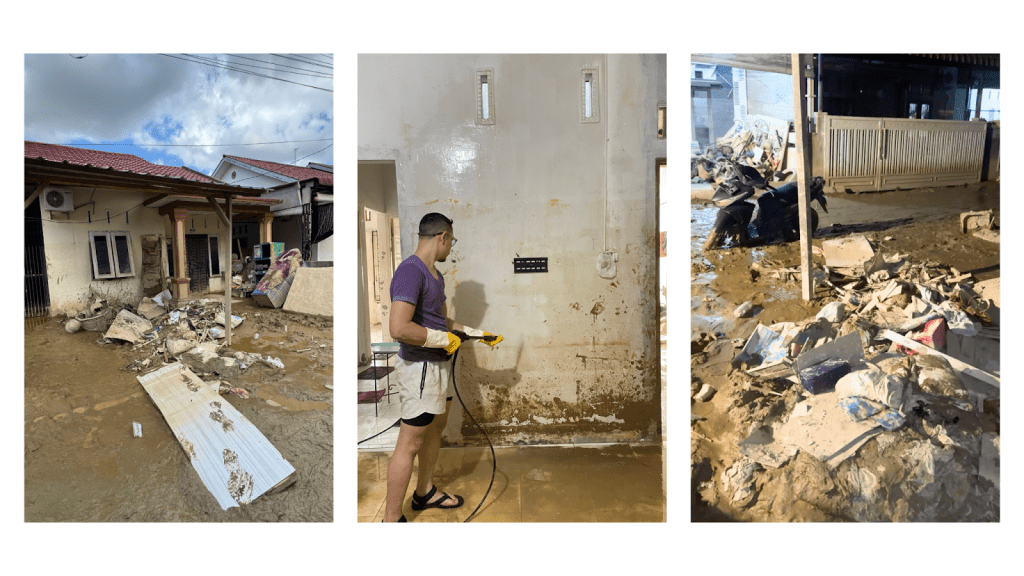
We needed effective tools, such as a jet cleaner, to remove the thick mud. For days, my father, my siblings, and I worked together to clean the house, including furniture and household equipment. It was exhausting, but very satisfying when the house was finally clean and usable again.
Even after that, we still faced problems with road access. Heavy equipment was needed to remove the mud from the streets. Since the mud could no longer flow away naturally, the only solution was to dig it up with excavators, load it onto trucks, and transport it—along with broken household items—to a disposal site. This process took a long time and required a lot of money. It also depended on the cooperation of all residents.
Teaching at an Emergency School
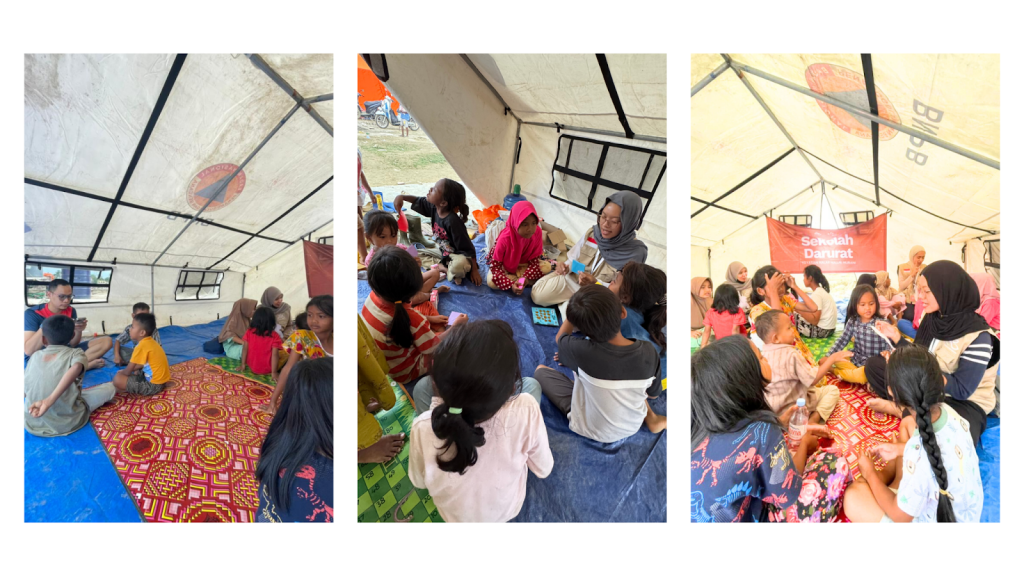
A few days before returning to Bandung (about 152 km from the capital), I had the chance to teach at an emergency school in one of the largest refugee camps in Aceh Tamiang. About 90% of the buildings there had been destroyed by the flood, and residents were living in tents.
Together with friends from a foundation, I taught children from kindergarten to elementary school. We focused on trauma healing and combined learning with fun activities. This was very important, especially since regular schools were not yet operating at that time.
That is the story of my journey in Aceh Tamiang. I still feel sad when I remember visiting the affected villages—mud everywhere, damaged houses, and piles of broken, muddy belongings along the roadsides.
I still cannot imagine how long it will take for everything to fully recover. However, I believe the people of Aceh Tamiang are strong and resilient. I am confident they will get through this disaster and, one day, grow into an even better community and city.
===
Note from Puti: from the EBLP fundraiser, we have collected the total of $450 for Patria’s family in Aceh. Thank you so much to all the donors!
 Elaine Bacon Literacy Program