
Hello Denise! How are you? How’s summer been treating you so far? What do you find is different from the previous years? What do you like and what do you miss?
Hello Puti, First I want to thank you for suggesting these interviews. Such a wonderful way for our community to become better acquainted.
I need to take a big breath before answering your opening question because my personal summer has been marked by both sadness and happiness because the grief over my husband’s death in January has been made bearable by the overwhelming love and support of the many family and friends, including the wonderful students and members of this program. I feel so glad to be associated with this international community.

Of course, sadly Covid 19 brought the biggest change to our program by preventing us from meeting in person. However, being forced to retreat to online classes was not all bad because we were able to expand our boundaries to include students from around the world in our classes. For instance, Anna Zhang and I continue to meet weekly even after she moved away from Houghton. Also my student Dejlah Meezel recently moved away too but we continue as usual on Zoom.

In addition Beth Flynn has two Indonesian students who Zoom into her classes from Indonesia! and Jan Handler is now tutoring a former Houghton student who now lives in Washington D.C. as she prepares for her Citizenship exam. Online teaching has to count as the biggest change to our program, and, while it lacks a more personal connection of person-to-person meetings, it has enabled us to expand beyond physical boundaries. The casual outdoor meetings on the beach were lots of fun too. I now have two students who meet me at my house and two who meet on Zoom, so we have transitioned to a combo situation of in person and on-line.
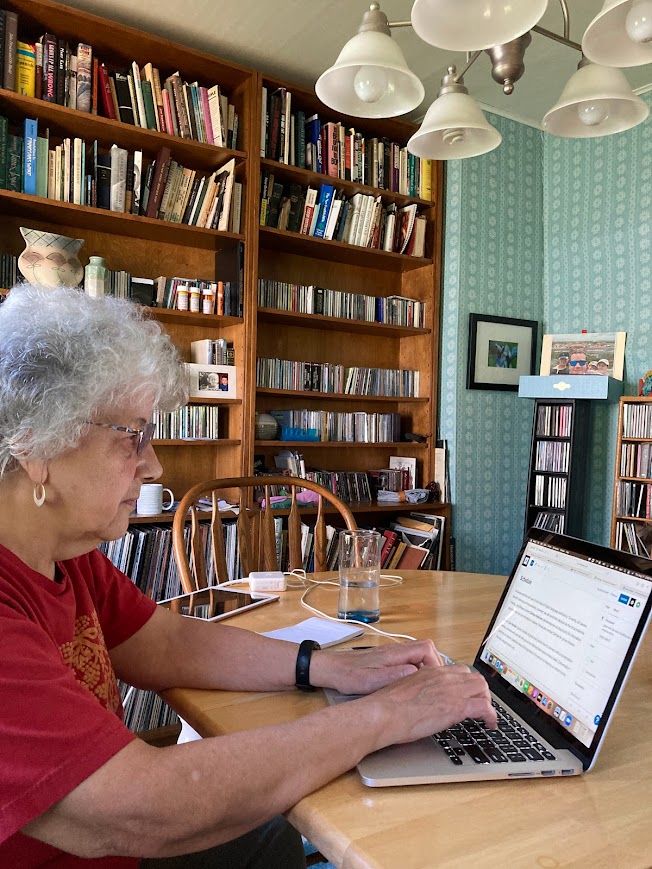
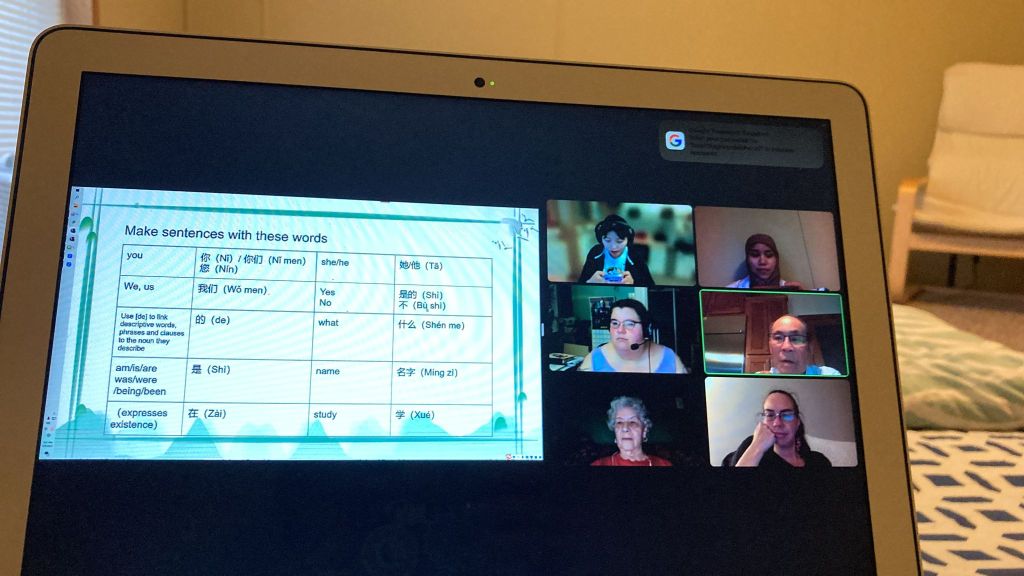
Thanks to EBLP student Shasha Zhang, we now can claim yet another change to our program. Shasha had been teaching Chinese every Tuesday evening for the past few years. These classes are casual and friendly but they provide students with a foundation of Mandarin and a sense for Chinese culture. Shasha’s Chinese lessons have attracted several local MTU students as well as from the Copper Country community. EBLP members like myself and Pichai Sripaipan are also learning Chinese. However, Shasha is now in Sweden with her family on sabbatical but we thank her for finding Judy Long to take over the class. My struggles with Chinese pronunciation make me better appreciate what my students go through as they try to pronounce English!
I am deeply sorry for your loss, I can only pray that every day will be easier for you until the time you will reunite again with Dave. May he rest in peace. Amen. Denise, I am interested to get to know about your background, can you tell us about your childhood and your background?
I was born on March 8th, 1947 in Detroit, Michigan, and grew up in the neighboring city of Hazel Park. I am the fifth of 6 children and attended Detroit schools. Hazel Park was a typical 1950s style neighborhood–entirely white with very homogenized habits and customs. Although my mother was an immigrant from a French speaking community near Montreal, Quebec, and my father was the son of a German immigrant, I had little to no experience with people of color or with people from other countries.


I first attended Wayne State University in Detroit, but before completing my bachelor’s degree Dave and I moved to the Upper Peninsula. He had fond memories of vacations on his grandparents’ farm in Nisula, Michigan, so we have made the Houghton area our home since 1970. I’ve fallen in love with the Copper Country–its natural beauty, its Finnish background, and the wonderful people I’ve known here.
I eventually completed my first degree in Humanities at Michigan Tech and then continued on to earn my PhD and teach at MTU as well as at Finlandia. I also worked at Sustainable Futures Institutes at MTU before retiring. In addition to my involvement with EBLP, I belong to a study group and a book club. I also try to keep physically fit with exercises and I walk regularly, often while listening to books.
My lifelong love for language and the diversity of cultures has developed all my life. After my son graduated from college he taught English for several years in China and now his wife is from China, which explains my interest in learning Chinese language and culture. My grandchildren speak fluent Chinese too.
That’s great! I always want to learn new language, but always surrender in the first week to continue learning about it! I hope you can be a fluent in Chinese language/ Mandarin. Anyhow, I came to your house once, and I noticed that there are many vinyls. Can you share some of your favorites to listen to?
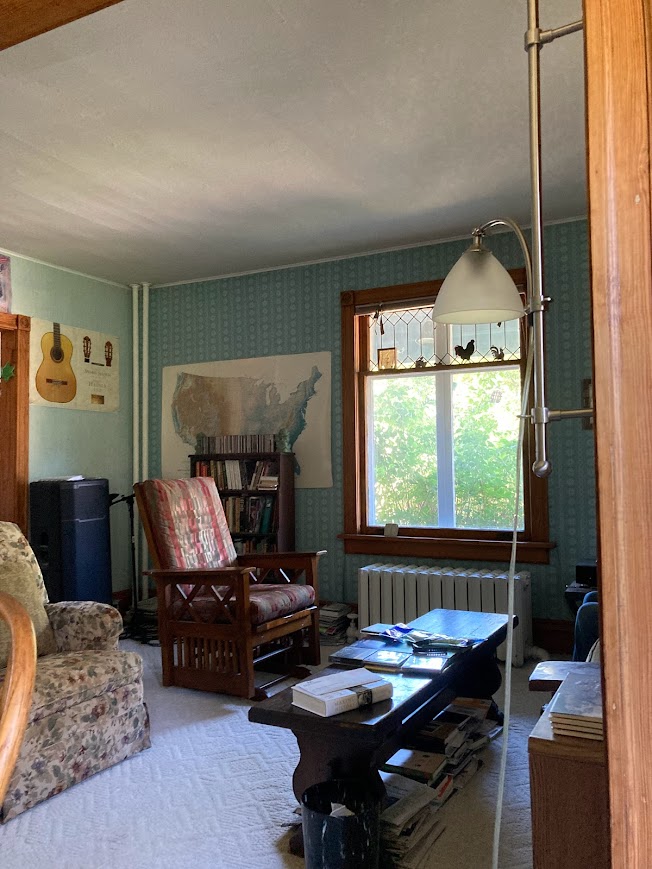
Ha! Yes, not only vinyl records but hundreds of CDs line the shelves of my bookcases. Many others are hidden away in cupboards and in the attic too! It was my husband who loved music of many kinds and I’ve reaped the benefit of his enthusiasm for music.
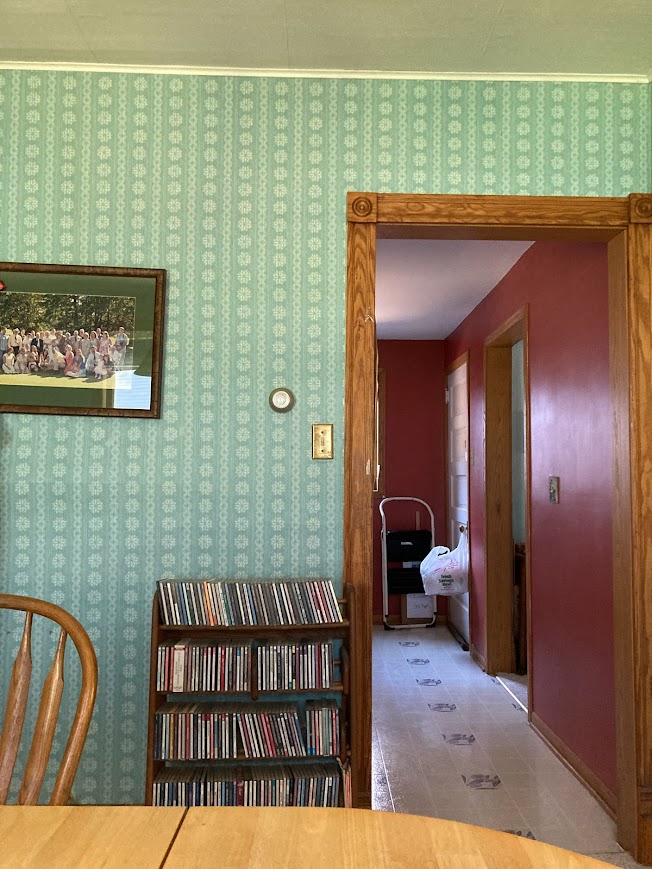
Dave and I met in the 60s on the campus of Wayne State University where he would talk to me about Beethoven, Mozart or the Beatles and jazz, maybe especially jazz–John Coltrane, Ornet Coleman, Thelonius Monk–Oh my goodness just so many! I think our turntable gave out at about the time CDs began to replace vinyl. Now vinyl is rebounding. I credit Dave for my appreciation of many kinds of diverse music.
You have been married for 50+ years with Dave, do you have some “key to a happy marriage”? And what is your fondest memory with him?
Ha! I don’t have the key to a happy marriage! Though I will say that mutual respect and encouragement are essential to any happy marriage. No marriage is happy all the time and we had our ups and downs, of course, but we trusted each other and felt secure that we always had the other’s best interest in mind. We also tried not to take ourselves too seriously. Maybe the key to a happy marriage is to stop looking for a “key” as if there is one magic answer to use in all situations and for all people.
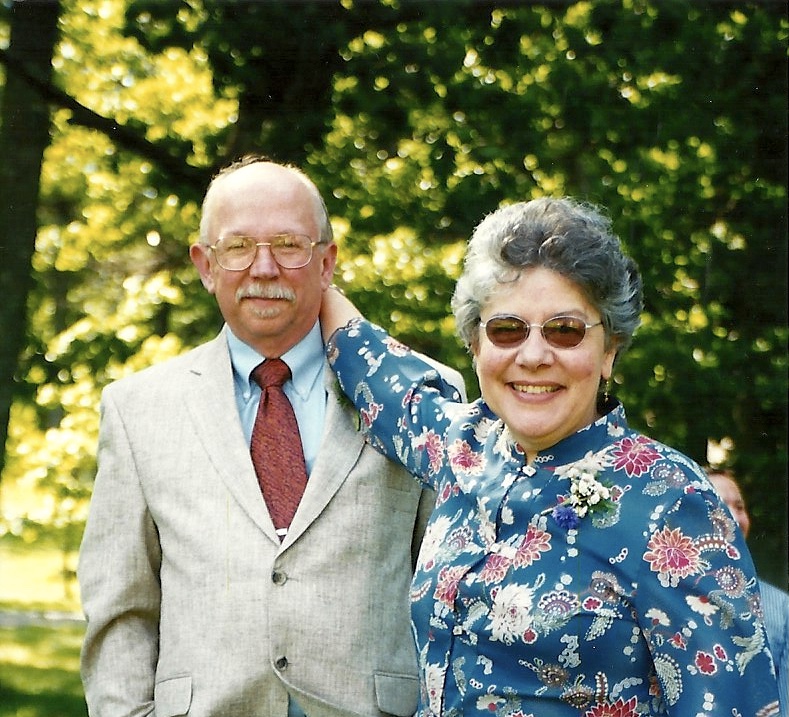
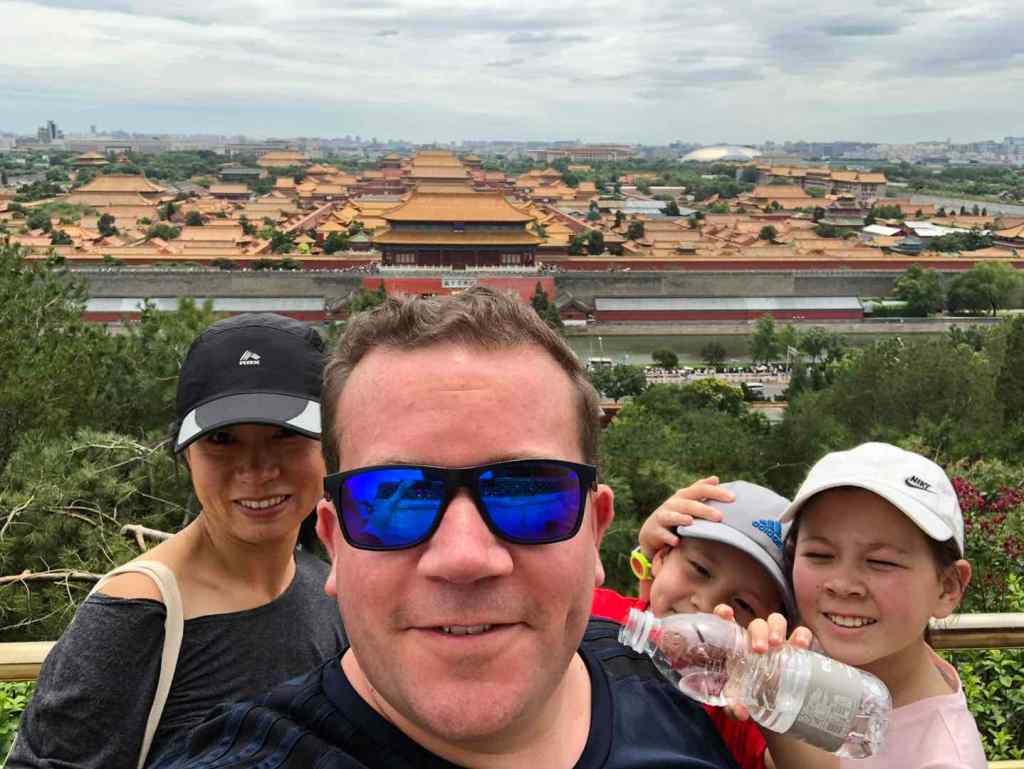
No particular moments come to mind without a lot of explanation, but I’ve got a lot of memories to savor in the years ahead. A very gratifying part of our marriage comes from raising my son, Sam. I am especially proud of him and his wife Yang, and our grandchildren Sammi and Waylon. My struggles with Chinese pronunciation make me more empathetic and patient with my own students as they try to pronounce English!
Lovely! What do you miss the most from your university days as a lecturer?
I miss the students and I miss learning about their families and their dreams. I like to think I left an impression on students that education is about more than just a career; it’s about the joy of curiosity and the need to be open to ideas. I’ve enjoyed every stage of my life. I have to say that retirement is a special time and I’m enjoying it now!
You are also an active part of Hancock Home Study Club. However, some people, even those who have lived in the area for a long time) are not familiar with that organization. Do you mind sharing something about this club for the reader?
The Hancock Home Study Club was established as a social club in the area in 1883 to give local women, (mostly wives of mining company executives) an outlet for discussion of educational topics. Currently, we have about 15 to 20 members and we meet about twice a month.
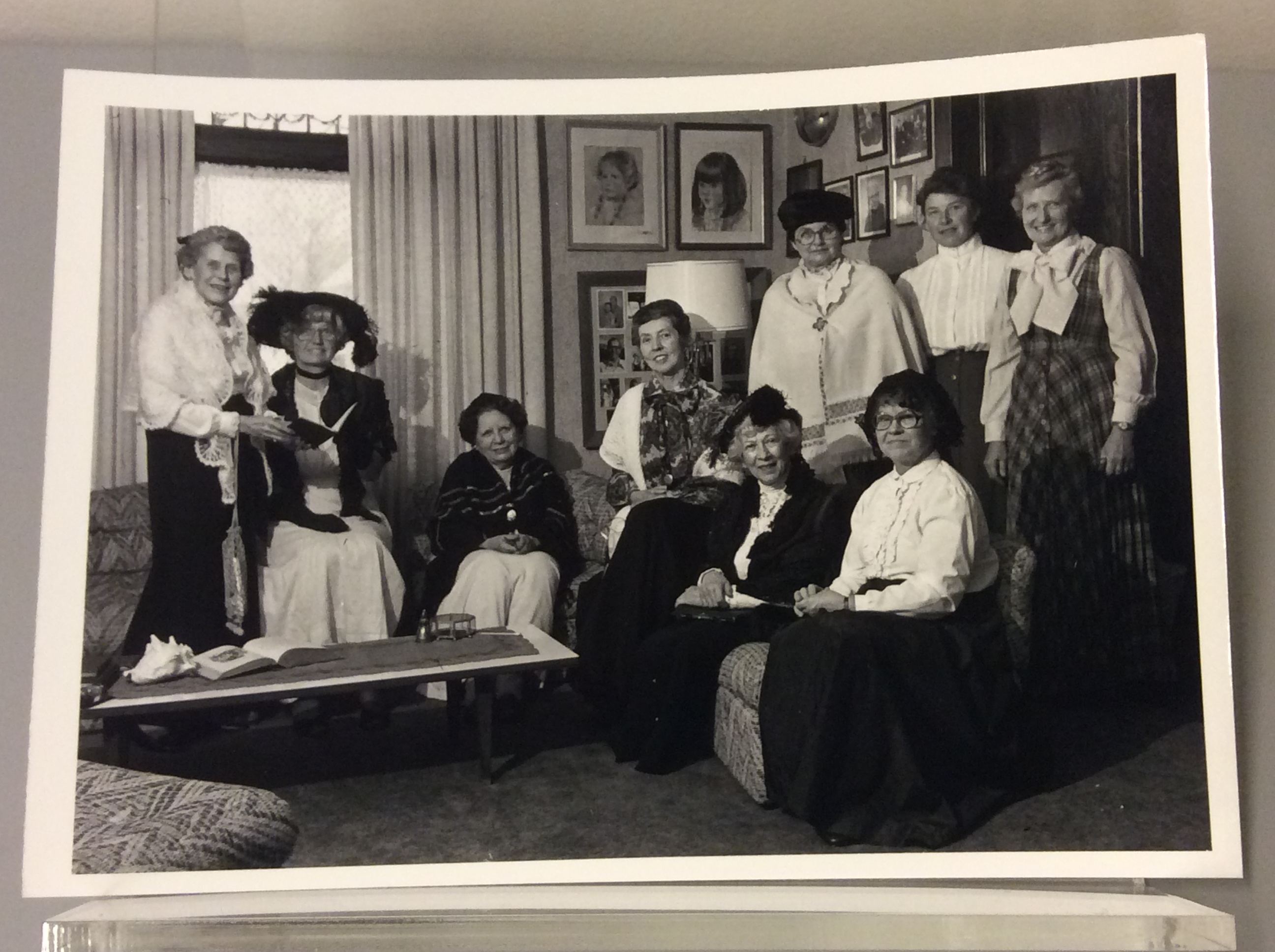
Each year we pick a theme to study and take turns presenting some aspects of that theme to the others. For instance, last year the club heard presentations on the theme of SCANDALS! Other themes over the years have been about women authors, agriculture, and cities, to name a few. This coming year the theme is DISASTERS!
===
Thank you for a wonderful interview Denise!
Interviewed by Puti Ceniza Akbar
 Elaine Bacon Literacy Program